Ginger is one of the major spice crops cultivated in the humid tropical regions of southern India and contributes significantly to the livelihood of farmers in many high-range production belts. With planting activities set to commence in several ginger-growing regions, scientists at ICAR-IISR have stressed the importance of early preventive management to minimise the risk of disease outbreaks. Changing weather patterns — characterised by prolonged humidity, intermittent rainfall, morning dew, and moderate temperatures — have created favourable conditions for the development and spread of fungal diseases in ginger.
Field Photographs — Affected Ginger Crop
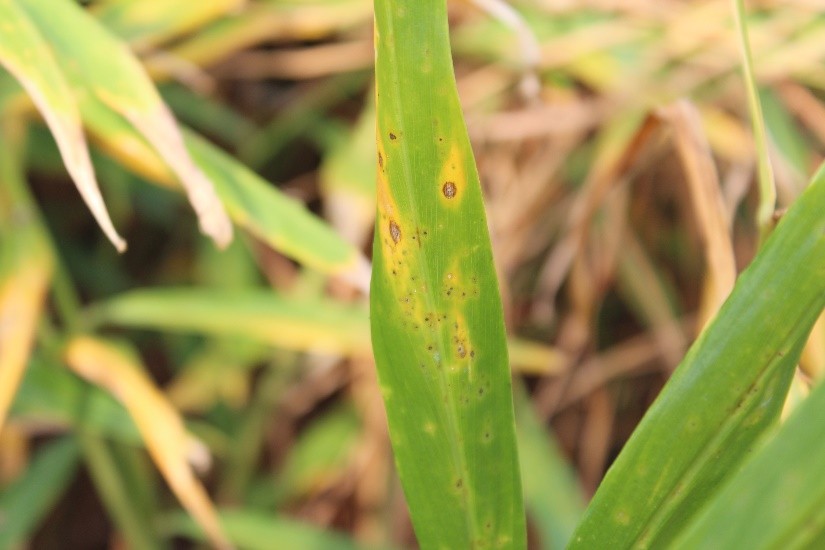
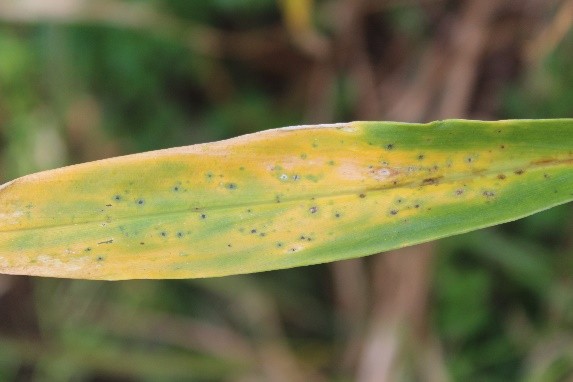
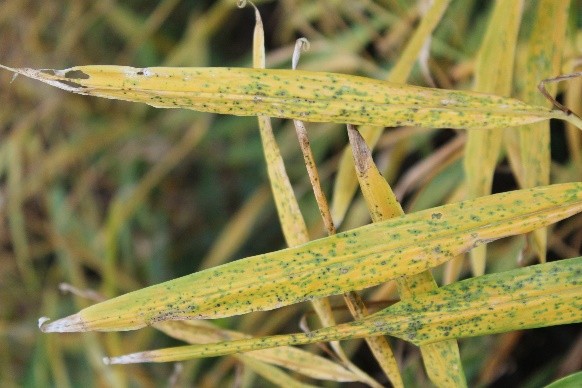
Photos: ICAR-Indian Institute of Spices Research / Regional Station, Appangala | Click any image to enlarge
About the Pathogen — Pyricularia spp.
The disease is caused by the fungal pathogen Pyricularia spp., widely known for causing blast diseases in monocot crops such as rice, wheat, and barley. Its occurrence in ginger has drawn serious attention due to the rapid nature of infection and the extent of crop damage observed under favourable climatic conditions.
Pyricularia spp. (Fungal pathogen — blast disease group)
Rice, Wheat, Barley — now emerging in Ginger
Prolonged morning dew, high humidity, moderate temperatures, intermittent rainfall
Significant reductions in rhizome weight and quality; rapid field-level spread
Disease Symptoms — Stage-wise Progression
| Disease Stage | Visible Symptoms | Impact on Crop |
|---|---|---|
| Early Stage | Small black to dark olive-green pinhead-sized lesions on leaves, surrounded by yellowing | Limited at this stage; easily manageable with prompt action |
| Progressive Stage | Extensive yellowing and drying of foliage; lesions coalesce and spread across leaf area | Severe reduction in photosynthetic activity |
| Advanced Stage | Widespread foliage death; rapid spread across the field under humid conditions | Significant rhizome weight & quality loss; major economic losses to farmers |
Note: Although the pathogen does not directly infect rhizomes, substantial reductions in rhizome quality have been reported from affected fields.
First Identification and Changing Pattern of Spread
Kodagu District, Karnataka
The disease was first identified in ginger-growing tracts of Kodagu district by scientists of ICAR-IISR and its Regional Station at Appangala. The outbreak was noticed in six to seven-month-old crops during September and October, following periods of prolonged morning dew and high atmospheric humidity. Detailed field investigations and laboratory analyses confirmed Pyricularia spp. as the associated pathogen.
Mysore (Karnataka) & Wayanad (Keralam)
A noticeable shift in the disease pattern was observed. In addition to Kodagu, widespread incidence was reported from parts of Mysore district, Karnataka, and Wayanad district, Keralam. More critically, the disease appeared at earlier crop stages — plants as young as three to four months old — thereby increasing the severity of crop damage and yield reduction.
Preventive Advisory for Farmers — Season 2026
The institute advises farmers to adopt the following preventive and management measures during the forthcoming cropping season:
-
1Seed Rhizome Selection: Only healthy and disease-free seed rhizomes should be selected for planting. Visual inspection is essential before procuring planting material.
-
2Pre-planting Seed Treatment: Prior to planting, soak seed rhizomes for 30 minutes in either:
◆ Propiconazole at 1 ml per litre of water, or
◆ Carbendazim + Mancozeb at 2 g per litre of water.
Treated rhizomes should be shade dried and stored in a well-ventilated place before planting. -
3Prophylactic Field Spraying: Undertake prophylactic spraying with Propiconazole or Tebuconazole at 1 ml per litre, three to four months after planting — particularly in areas prone to prolonged humidity and dew formation.
-
4Regular Field Surveillance: Monitor fields regularly for early symptoms — dark pinhead-sized spots accompanied by yellowing of leaves. Early detection is the single most important factor in preventing large-scale disease spread.
-
5Immediate Action on First Symptoms: Upon noticing initial symptoms, immediately spray with Propiconazole or Tebuconazole at the recommended dosage to arrest further disease spread. Do not delay.
-
6Follow-up Spray: A second spray with the same fungicide — or a combination formulation containing Tebuconazole + Azoxystrobin — may be given 10–15 days after the initial application, based on disease severity and prevailing weather conditions.
-
7Sanitation & Crop Residue Management: Remove and destroy severely infected crop residues from the field. This helps reduce the build-up and spread of inoculum to neighbouring plants and the next crop cycle.
Fungicide Quick Reference
| Fungicide | Dose | Application Stage | Use |
|---|---|---|---|
| Propiconazole | 1 ml / litre of water | Seed treatment (30 min soak) | Seed Treatment |
| Carbendazim + Mancozeb | 2 g / litre of water | Seed treatment (30 min soak) | Seed Treatment |
| Propiconazole | 1 ml / litre of water | 3–4 months after planting / on first symptoms | Field Spray |
| Tebuconazole | 1 ml / litre of water | 3–4 months after planting / on first symptoms | Field Spray |
| Tebuconazole + Azoxystrobin | As per label / recommended dosage | 10–15 days after first spray | Follow-up Spray |
ICAR – Indian Institute of Spices Research, Kozhikode, Keralam – 673 012
Phone: 0495-2731410 | Website: spices.res.in